
Why Personalized Gifts Feel More Thoughtful
Table of Contents
- The Psychology Behind Why Personalized Gifts Feel More Thoughtful
- What Makes a Gift Thoughtful: Effort, Memory, and Meaning
- How to Make a Gift More Personal Without Overdoing It
- Personalized Gift Ideas That Create Lasting Memories
- Thoughtful Gifts for Someone Who Has Everything
- Budget-Conscious Personalization: Meaning Over Money
- Potential Downsides and Recipient Preferences to Consider
- Conclusion
- Frequently Asked Questions
Last Updated: October 18, 2026
The Psychology Behind Why Personalized Gifts Feel More Thoughtful
Personalized gifts feel more thoughtful because they prove the giver paid attention.
At Giftify, we see this play out every day. Shoppers who start with "I don't know what to get" end up choosing a custom piece, and the reaction is almost always the same.
Below, we break down the psychology, the practical process, and the traps to avoid. You'll also find concrete gift ideas you can act on today.
How Personalization Signals Attention and Care
Attention is the real currency in gift-giving. A generic item says, "I grabbed something." A customized item says, "I thought about you specifically."
That difference is easy to underestimate. Research on gift-giving suggests recipients value the thought behind a present as much as the object itself, sometimes more.
Think about what personalization actually requires:
- Remembering a detail about the person
- Choosing an item that fits their taste
- Committing to a specific name, date, or word
Every step is a small act of care. The recipient sees the result and imagines the process.
The Emotional Impact of Feeling Seen and Valued
Feeling seen is a basic human need, and gifts are one of the few everyday ways to meet it.
That message does real work. It can lift self-worth, deepen a bond, and turn a routine occasion into a memory.
What Makes a Gift Thoughtful: Effort, Memory, and Meaning
A thoughtful gift combines three things: effort, memory, and meaning. Effort shows you tried. Memory shows you listened. Meaning shows you understand what the person values.
Miss one and the gift weakens. A high-effort gift with no memory behind it feels random. A memory-rich gift with no effort feels like a text message.
Here's how the three stack up:
| Element | What It Signals | How to Add It |
|---|---|---|
| Effort | "I made time for you" | Custom engraving, hand-written note, made-to-order item |
| Memory | "I remember us" | A shared date, trip, or inside reference |
| Meaning | "I know what you value" | Match the item to their interests and tastes |
Get all three right and the present stops being an object. It becomes a keepsake.
How to Make a Gift More Personal Without Overdoing It
The line between thoughtful and try-hard is thinner than most people think. Personalization works when it feels natural. It backfires when it feels forced or over-designed.
A Practical Process for Choosing and Personalizing
We use a simple four-step process with our own shoppers. It works for birthdays, anniversaries, and just-because gifts.
- Name the relationship. Partner, parent, friend, coworker. Each calls for a different tone.
- Pick one detail. One memory, one nickname, one date. Resist the urge to include five.
- Choose a base item they'll actually use. Jewelry, a journal, something that fits their daily life.
- Add a note. A short, personal message does more than a long one.
That's it. Four steps, and the gift already feels tailored.
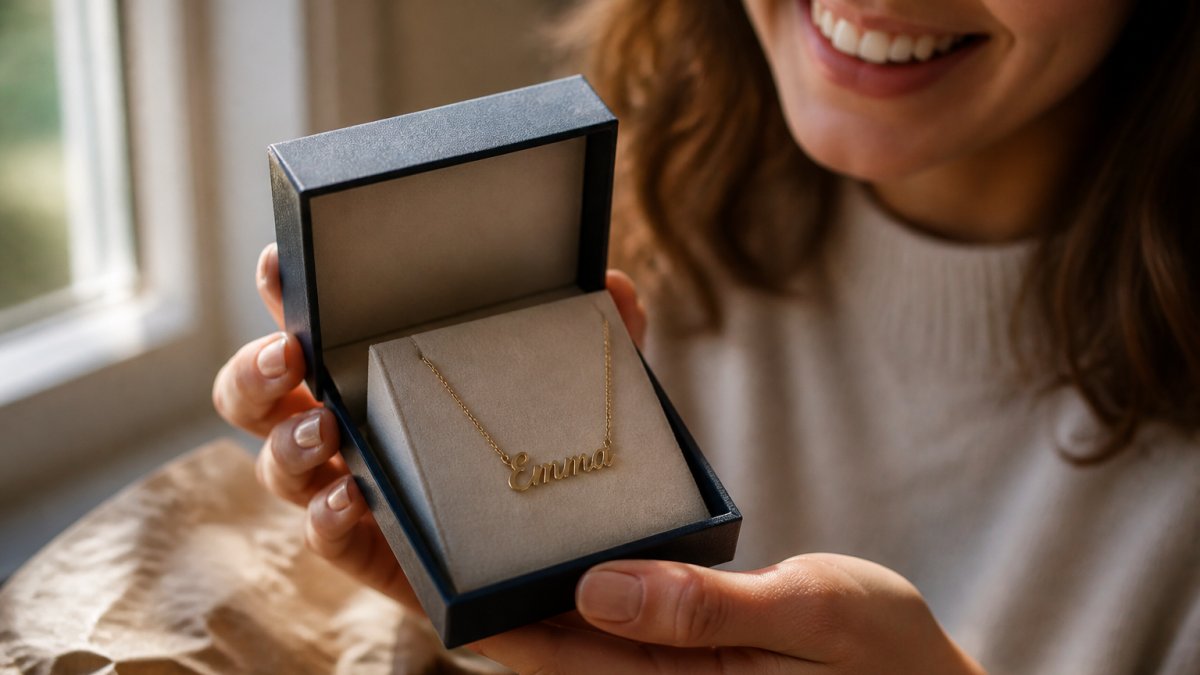
For step three, our Classic Vertical Name Necklace is a strong base. It's made in the USA, customized with up to 10 characters, and comes on an adjustable 16"-18" cable chain in polished stainless steel or 18K yellow gold finish.

Avoiding the Tacky Trap: Thoughtful vs. Try-Hard
Tacky personalization usually comes from piling on. Too many names, too many colors, too many inside jokes crammed into one item. The recipient can't tell what the gift is trying to say.
The fix is subtraction. One detail, done well, beats five done loudly. If you're unsure whether a personalization choice is too much, it probably is.
Personalized Gift Ideas That Create Lasting Memories
The best personalized gift ideas share one trait: they get used. A keepsake that sits in a drawer loses its power.
A few ideas that hold up across occasions:
- A name necklace for a partner or close friend. Worn daily, remembered daily.
- A heart-style name necklace for anniversaries and milestones. The heart shape adds warmth without being loud.
- A custom journal for the person who thinks out loud or sets goals.
- A hand-wrapped gift with a personal note for smaller occasions where the message matters more than the item.
Our Classic Heart Style Name Necklace fits the anniversary slot well.

For the writer or planner in your life, the People, Places, Memories Journal pairs a vegan leather cover with 200 lined pages, a ribbon bookmark, and an elastic closure band.
And if you want the message to land before the box even opens, our Gift Wrap with Personalized Message adds a hand-wrapped finish and a note in your own words.
Classic Vertical Name Necklace →

Thoughtful Gifts for Someone Who Has Everything
Shopping for the person who has everything is really a search for meaning, not stuff. They don't need more objects. They need something that says you know them.
That reframes the whole task. Skip the upgrade to what they already own. Go for something sentimental instead:
- A custom piece tied to a shared memory
- A journal for the next chapter of their life
- A note that says what you've never quite said out loud
Sentimental value doesn't require a big budget. It requires specificity. A $58 necklace with the right name on it can outshine a far more expensive gift with no story behind it.
Budget-Conscious Personalization: Meaning Over Money
Thoughtfulness and price are not the same thing, and the research on gift-giving supports what most people already suspect: recipients tend to remember the gesture and the note longer than the object. A small, well-chosen customization often beats a costly generic present. The trick is knowing where meaning actually comes from, and where money adds nothing.
Where Meaning Comes From (and Where It Doesn't)
Meaning in a gift comes from three levers, and only one of them costs money:
- Specificity, a detail only you would know. Free.
- Effort, the time you spent choosing, writing, or making. Mostly free.
- Materials, the base item itself. This is the only lever that scales with budget.
Most people overspend on materials and underspend on specificity and effort. Flip that ratio and a modest gift starts to feel expensive in the way that matters.
Low-Cost Personalization Ideas That Actually Land
These are the moves we see work again and again, and none of them require a big spend:
- Write the note by hand. A short, specific message, one memory, one sentence about why you chose this, costs nothing and is frequently the part people keep. Skip the printed card.
- Personalize one element, not five. A single engraved initial or date on an affordable base item reads as intentional. Five custom elements read as cluttered.
- Use a shared reference instead of a product upgrade. A inside joke, a trip, a song, these cost nothing to include and carry more emotional weight than a premium finish.
- Choose a base item they will use weekly. A journal, a mug, a simple piece of jewelry. Frequency of use multiplies the meaning per dollar.
A Simple Budget Framework
Before you buy, ask three questions in order:
- What is the one detail? If you can't name it in a sentence, you're not ready to buy.
- What is the cheapest base item that fits their daily life? Start low; upgrade only if the detail demands it.
- What will I write? If the note is doing the heavy lifting, the item can be simpler.
A hand-written message costs nothing and often becomes the part people keep. Pair it with a modest custom item and you've built a gift with real weight, without stretching the budget.
Potential Downsides and Recipient Preferences to Consider
Personalized gifts aren't automatically a win. They can miss, and understanding why they miss is what separates a thoughtful gift from an awkward one. The good news: most failures follow predictable patterns, and each has a fix.
The Four Ways Personalization Backfires
1. The wrong detail. A nickname, date, or reference the recipient doesn't feel strongly about, or actively dislikes.
2. The wrong taste. A style that fits your aesthetic, not theirs.
3. Too public. A personal message that feels private and gets opened in front of a crowd, a workplace gift exchange, a family gathering.
4. Over-customization. So many elements that the gift feels cluttered and the message gets lost.
How to Read a Recipient's Preferences Before You Commit
You don't need to interrogate anyone. A few quiet signals do most of the work:
- Look at what they already own and use. Their daily carry, their jewelry, their desk. Patterns repeat.
- Ask a trusted third party. A partner, sibling, or close friend can confirm a detail or veto a bad one in seconds.
- Check the audience. Will this be opened alone or in front of others? Match the intimacy of the detail to the setting.
- Test the detail against their self-image. Would they describe themselves this way? If not, it's your memory, not their identity.
When Personalization Isn't the Right Move
Sometimes the most thoughtful choice is not to personalize. If the recipient is private, minimalist, or has expressed discomfort with custom items, a well-chosen generic gift with a strong note can outperform a custom piece. Personalization is a tool, not a rule, and knowing when to skip it is part of reading the person.
Conclusion
The hardest part of gift-giving isn't finding something nice. It's proving you were paying attention, and that takes a detail, not a bigger budget.
At Giftify, we built our collections around that idea.
Ready to give something made to mean more? New subscribers can get a 15% discount shipped to their inbox and start with a gift that says exactly the right thing.
Frequently Asked Questions
What makes a gift feel thoughtful?
A thoughtful gift shows the giver paid attention to the recipient's interests, memories, or preferences. It does not need to be expensive. Small details like a favorite color, a shared inside joke, or a name engraved on a keepsake signal that you see the person as an individual. Research on gift-giving consistently finds that recipients value the thought and effort behind a gift more than its price tag. The most meaningful gifts often reflect a specific moment or quality the recipient cherishes.
Do personalized gifts make people feel more appreciated?
Yes. Personalized gifts communicate that you invested time and consideration, which boosts a recipient's sense of being seen and valued. When someone receives an item customized with their name, a meaningful date, or a reference to a shared experience, it reinforces their identity and your connection. This emotional impact often lasts longer than the initial surprise because the gift becomes a keepsake. The feeling of appreciation comes from the recognition of their unique qualities, not from the customization itself.
How do you personalize a gift without making it feel generic?
Start with the recipient's actual interests and avoid default options like initials on everything. Choose one meaningful detail, such as a nickname only you use, a place you visited together, or a hobby they are passionate about. Keep the design simple and let the personal element stand out. A practical process helps: note three things the person loves, pick one that fits the occasion, and verify the spelling or date. Over-personalizing with too many elements can feel cluttered, so restraint often makes the gift feel more genuine.
What are some meaningful personalized gift ideas for someone who has everything?
Focus on consumable or experience-based items that reflect their tastes, such as a custom journal for memories, a name necklace in a minimalist design, or a personalized message in a gift wrap. For someone who has everything, the value lies in sentiment rather than utility. Consider a keepsake that commemorates a shared milestone or a hobby they enjoy. Experiences like a planned outing or a subscription to a niche service also work well. The key is showing you know them beyond material possessions.